Second IUU Fishing CAPFISH Workshop Delivered by WMU
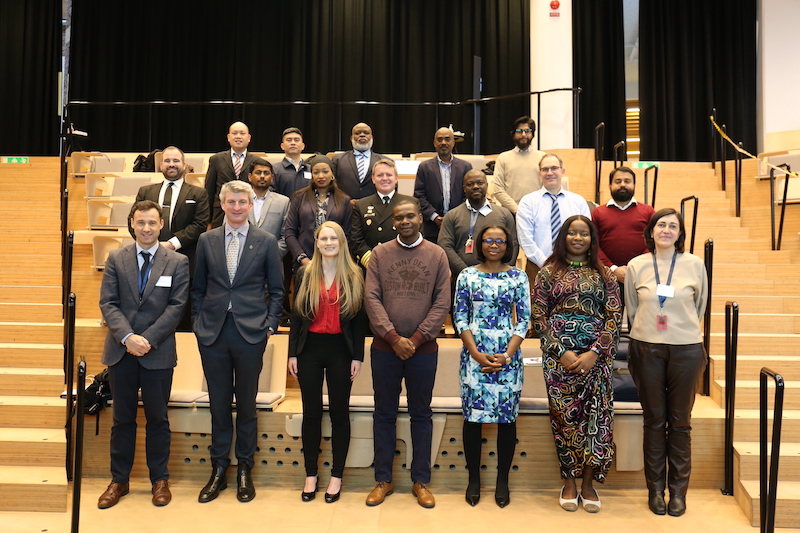
From 15-18 February, the World Maritime University (WMU) hosted the second workshop on Illegal, Unreported and Unregulated (IUU) fishing as part of the CAPFISH research project sponsored by the Ministry of Oceans and Fisheries (MOF) of the Republic of Korea and delivered in cooperation with the Korea Maritime Institute (KMI). The workshop included a broad spectrum of presentations from high level IUU Fishing experts to tackle the complex and multi-faceted issue. This second workshop was delivered to professionals from 19 countries and was framed similarly to the first CAPFISH workshop that was delivered in October to WMU students from 19 countries.
In opening remarks for the workshop, Dr. Cleopatra Doumbia-Henry, President of WMU, said, “IUU fishing continues to remain one of the biggest ocean and maritime challenges of our time and is a scourge from which the world needs to rid itself. It is not just an environmental problem but also has serious human and national security implications.” She noted the complexity of the IUU fishing problem, from the devastating effects on fishers and fishing communities to the social challenges that IUU fishing creates - including poverty and food insecurity, a rise in crimes such as piracy and armed robbery at sea, drug, arms and human trafficking, and forced labour and poor working conditions.
Mr. Hyuntae Kim, Director-General of MOF, addressed the participants, saying “IUU fishing destroys marine ecosystems and, therefore, must be dealt with through global cooperation.” He highlighted the importance of the workshop in providing the opportunity for cooperation and communication among developing nations, international organizations, and experts from around the world to combat IUU fishing.
In his welcome remarks, Dr. Jongdeog Kim, President of KMI, noted the far-reaching economic, social and environmental consequences of IUU fishing. He expressed his hope that the workshops and related educational materials, such as the report from Workshop 1, will contribute to developing a pool of future global maritime and fisheries talent and be effectively used to develop capacity in developing countries to combat IUU fishing.
A range of high-level speakers joined the workshop virtually as well as in person, providing a unique opportunity for transformative education to help solve the problem of IUU fishing. The workshop was the second in a series that will disseminate the expertise of United Nations specialized agencies and experts, including the Food and Agriculture Organization (FAO), the International Labour Organization (ILO), the International Maritime Organization (IMO), and the Organisation for Economic Cooperation and Development (OECD). In addition to the UN Agencies, speakers included representatives from the Argentinian Coast Guard, Spain’s Ministry of Transport, Mobility and Urban Agenda, University of British Columbia, University of Sierra Leone, St. Andrews University, University of Vigo, the Korea Maritime Institute, The Pew Charitable Trusts, the Korea Fisheries Monitoring Center, Global Fishing Watch, TMT, and independent experts from Canada, Iceland, Jamaica and New Zealand. Participants learned about how IUU fishing creates social, environmental and economic problems in the Caribbean, the South Atlantic, West Africa and the South Pacific. Regional collaboration was a major theme as it is crucial, particularly for developing countries, to pool resources and information to fight IUU fishing.
The combined perspectives are all key to building the knowledge of the participants, that included professionals from Belize, Côte d'Ivoire, Fiji, Ghana, Indonesia, Kenya, Liberia, Maldives, Mexico, Montserrat, Morocco, Mozambique, Pakistan, Peru, Philippines, Senegal, Somalia and Vietnam.
As a trans-disciplinary initiative, CAPFISH integrates science, economics, maritime policy and ocean governance, law and regulation, maritime technology and operation, safety at sea, societal factors, human rights, and compliance monitoring and enforcement. CAPFISH aligns SDG-17 (Partnerships for the Goals) with SDG 4 (Quality Education) to address the problem that IUU fishing presents for achieving SDG 14 (Life Below Water) and SDG 8 (Decent Work and Economic Growth).
To access the report from CAPFISH Workshop 1, click here.
To access the programme from Workshop 2, click here.

My decision to enroll in the doctoral program at WMU was heavily influencedby my prior experience as a Master's student at the institution. Initiallyintroduced to me as a preeminent global institution for maritime education,WMU's stellar reputation was further substantiated by the exceptional qualityof education I received during my Master’s studies. This experience became acompelling factor in my determination to return to WMU as a doctoral student.Recognizing the synergies between my research aspirations and the institutionalofferings at WMU, I concluded that continuing my educational journey at thisesteemed institution was not only beneficial but also aligned perfectly with myacademic and professional goals.
My research explored thetheoretical foundations of governance, placing a particular emphasis onmaritime governance. Going beyond mere theoretical frameworks, the studyconducted a comprehensive examination of a crucial aspect within maritimegovernance—specifically, the implementation of International MaritimeOrganization (IMO) instruments, exploring the contextual factors that affectthe implementation process. Applying the grounded theory methodology, theresearch aimed to understand these theoretical underpinnings, as well as firmlyanchor insights in the practical context of maritime governance; unveiling theintricacies and challenges associated with the effective implementation of IMOinstruments in the maritime domain. The selection of this topic was motivatedby a personal interest that was cultivated during my Master’s studies inmaritime law and policy. Furthermore, it was driven by the recognition of ascarcity of scientific research on this specific topic. This gap in theexisting body of knowledge served as a catalyst for my exploration,underscoring the significance of contributing valuable insights to an area ofmaritime governance that has been relatively underrepresented in scholarlyresearch.
Undoubtedly, a highlight of myeducational journey at WMU was the opportunity to forge connections withinfluential change-makers and thought leaders hailing from every corner of theglobe. This invaluable chance to engage with individuals on an internationalscale has not only enabled me to expand my global network but has also servedas a conduit for immersing myself in the rich tapestry of diverse cultures.Through these global interactions, I've gained a profound understanding ofdifferent perspectives, traditions, and approaches, contributing significantlyto my personal and academic growth. This experience goes beyond mere networkingand has also played a pivotal role in fostering stronger connections within theCaribbean region from which I hail.
Embarking on my professional path,my foremost aim is to establish myself as an authority in the field of maritimegovernance. I aspire to leave a significant and enduring mark on the globalmaritime landscape. Beyond the academic sphere, my drive is fuelled by apassionate interest in pursuing diverse opportunities within the maritimedomain and the broader educational sector and contributing significantly topositive transformations in the global maritime sector.

I was primarily attracted to WMU for its prestigious standing as a globalleader in maritime education and research. The institution's emphasis onsustainability and its diverse international student body were particularlyappealing. My research, which focuses on the transition of ports toward low andnear-zero carbon emissions, perfectly aligns with WMU's dedication tosustainable maritime practices. This common vision made WMU the ideal choicefor advancing my academic and professional aspirations in the maritimeindustry.
A significant highlight of my timeat WMU has been the invaluable opportunity to collaborate with a diverse groupof experts and peers from various corners of the globe. This internationalenvironment has broadened my perspective on maritime issues and fostered a richexchange of ideas. It has been a rewarding experience to engage in discussions,share insights, and work collectively toward innovative solutions to complexmaritime challenges.
Post-graduation, I am committed toapplying the knowledge and research expertise I've acquired at WMU to make ameaningful impact in the maritime sector. My plans involve activelycontributing to the sustainable transformation of the industry by focusing onthe implementation of greener and more efficient port operations. I aim to playa part in fostering a cleaner and more sustainable future for ports andshipping on a global scale.

When I made the decision to embark on the journey of pursuing both my MScand PhD degrees, the World Maritime University (WMU) beckoned me for severalcompelling reasons. Foremost among these was WMU's sterling reputation as aworld-class institution within the maritime sphere, a factor that wieldedsignificant influence over my choice. Given my extensive background as a seniorprofessional in the maritime operational field, having held the role of acaptain, I was in search of an academic environment that could serve as a nexusfor both enriching my knowledge and providing a platform for the disseminationof my wealth of industry experience.
WMU's unwavering commitment tomaritime education, coupled with its resolute emphasis on bridging the realmsof academia and industry, deeply resonated with me. It became evident that WMUwas the perfect crucible for my transformation from a career entrenched inmaritime operations to one flourishing within academia. The University'sstoried tradition of nurturing and producing experts and leaders within themaritime sector further solidified its standing as the ideal choice for myeducational pursuits.Furthermore, WMU's distinctive interdisciplinary approachto maritime studies served as an irresistible attraction.
My research focus during my tenureat WMU was centered on the pivotal subject of achieving net-zero emissions inthe maritime sector, encompassing both offshore and onshore infrastructures,including ports and shipyards. This particular research avenue held greatappeal for me due to its unique capacity to amalgamate my extensive practicalexperience as a captain within the maritime operational field with the rigorousacademic environment provided by WMU. The maritime industry is inherentlydynamic, constantly undergoing transformative changes, and I was deeplyconvinced that my research endeavors could significantly contribute toenhancing sustainability within this vital sector. The prospect of influencingpositive change by addressing contemporary challenges and emerging trends inthe maritime industry, all closely aligned with my professional background,served as a compelling motivation for my choice of research focus.
One of the most memorable aspectsof my WMU experience has undoubtedly been the University's vibrant andinclusive interdisciplinary environment. Engaging with both faculty members andfellow students hailing from diverse backgrounds and nationalities has been anincredibly enriching facet of my academic journey. This inclusive atmospherehas offered me a unique opportunity to gain fresh insights and perspectivesthat would have remained undiscovered within the confines of a purely industry-focusedsetting. The collaborative exchange of ideas across various maritimedisciplines has proven to be invaluable, expanding my horizons and enriching myeducational experience. Additionally, the regular involvement in thoughtfuldiscussions, seminars, and workshops focused on globally relevant maritimetopics has served as a consistent source of inspiration throughout my time atWMU. The University’s unwavering dedication to cultivating a global network ofmaritime experts has allowed me to establish meaningful connections withprofessionals and scholars from across the world. These connections have notonly broadened my academic horizons but have also added a global dimension tomy educational journey, enhancing its depth and significance.
Upon graduation, I was awarded aprestigious research fellowship in sustainability, energy, and the pursuit ofnet-zero emissions within the maritime industry at the esteemed University ofSouthampton in the United Kingdom. This exciting opportunity marks the nextphase of my academic and maritime journey. I remain passionately committed tocontinuing my exploration of academia and the maritime sector, building uponthe invaluable knowledge and experience I acquired during my time at WMU. Myprimary objective is to contribute significantly to the advancement of thezero-emission maritime industry, a pivotal and transformative sector within ourglobal community.
